Ronnie Tjampitjinpa
Emu Dreaming, from the Crossroads portfolio, 1997
woodcut on Magnani Pescia 2020, 300 gsm paper
60 x 45 cm (image); 76 x 56 cm (sheet)
with artist name ‘RONNIE TJAMPITJINPA’ (lower left); with title ‘EMU DREAMING’ and editioned from an edition of 99 (lower right)
Provenance
Printed by Tom Goulder, Duck Print Limited Editions
Estate of Leo Christie
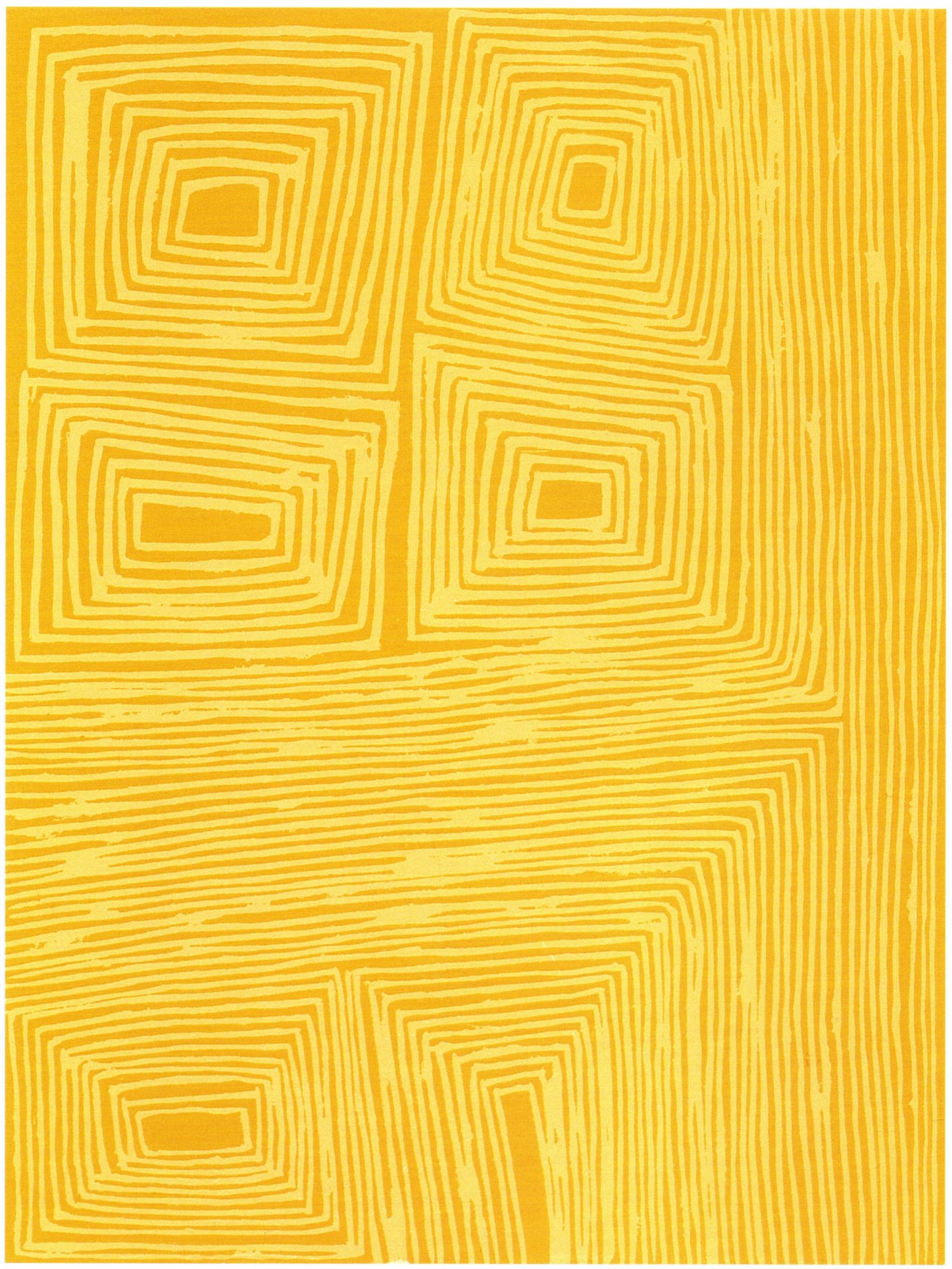
Ronnie Tjampitjinpa was born around 1943 and has travelled extensively across the Pintupi territory. He started painting in 1971 just as the desert art movement was starting in Papunya. Tjampitjinpa's work follows the Pintupi style of strong circles joined together by connecting lines relating to the people, country and the Dreamtime. His early painting were part of the first wave of artists to combine traditional aboriginal stories with modern artistic expression. The ancient stories of the Tingari inform the majority of his imagery. The Tingari Cycle is a secret song cycle sacred to initiated men. The Tingari and Dreamtime Beings travelled across the landscape performing ceremonies to create and shape the country associated with Dreaming sites.
Tjampitjinpa first exhibited in the Papunya Tula exhibitions of the 1970s before being represented from the 1980s by Melbourne gallery Gallery Gabrielle Pizzi and Sydney gallery Utopia Art Sydney. His work was included in the exhibition 'Aboriginal Paintings from the Desert', Moscow and St Petersburg in 1991; '1993 Australian Perspecta', Art Gallery of New South Wales, Sydney, 193; and, 'Le Voci della Terra', Galleria Gottardo, in Lugano, Switzerland,1994. He was also included in the groundbreaking retrospective exhibition in 2000, 'Papunya Tula: Genesis and Genius', Art Gallery of New South Wales, Sydney. Tjampitjinpa is well represented in all State galleries and major contemporary art private collections across Australia.

